This twinBASIC project demonstrates the process of sending emails using the Google OAuth2 protocol and PKCE (Proof Key for Code Exchange) for enhanced security.
The project below was a proof of concept that I built in less than a month as part of the February twinBASIC Create a Game Challenge. I primarily wrote the architecture documents with the assistance of AI and had Claude Opus 4.6 plan and implement nearly all of the source code.
The key to making this workflow possible is exporting the contents of the .twinproj file to text using the techniques described in the article below, letting the AI read and write to these exported text files, and then importing them to rebuild the .twinproj file. Lather, rinse, repeat.
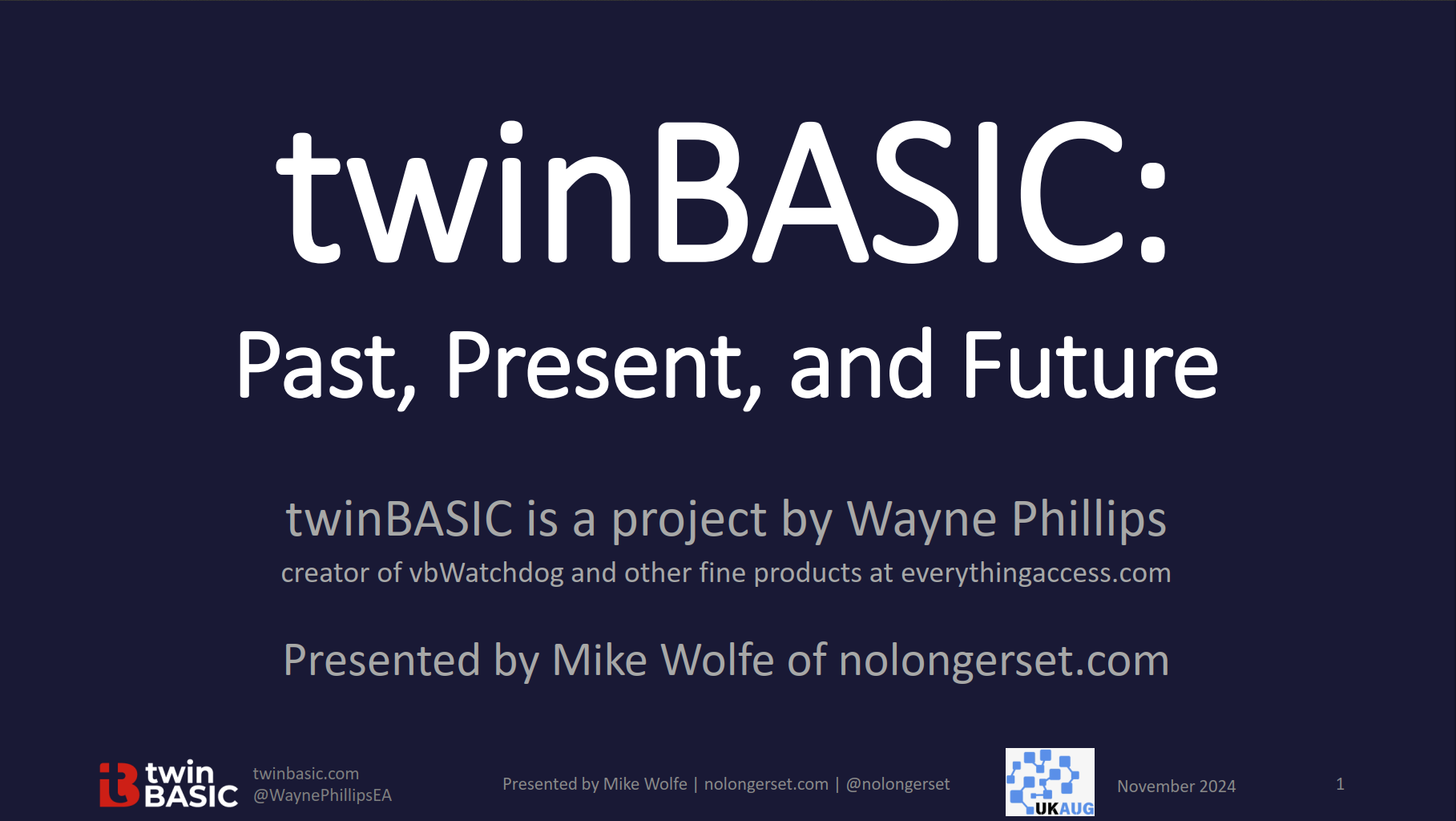
If you had never heard of twinBASIC prior to today's presentation, the video below will provide some much-needed context. It does a good job of covering the new language features introduced with twinBASIC.
Keep in mind, this presentation took place about a week after the very first alpha release of the twinBASIC language. Let's just say, the project has progressed more than just a bit since then.
Karl invited me back the following year to provide an update on twinBASIC after its first full year of development. The video includes multiple live demos of real world use cases for integrating twinBASIC into Microsoft Access and the VBA development environment.
For the third year in a row, Karl brought me back to provide my now-annual update on the progress of twinBASIC. The focus in this presentation was how twinBASIC might integrate with Microsoft Access one day. I covered how twinBASIC will–and also will not–likely be used by Access developers in the future.
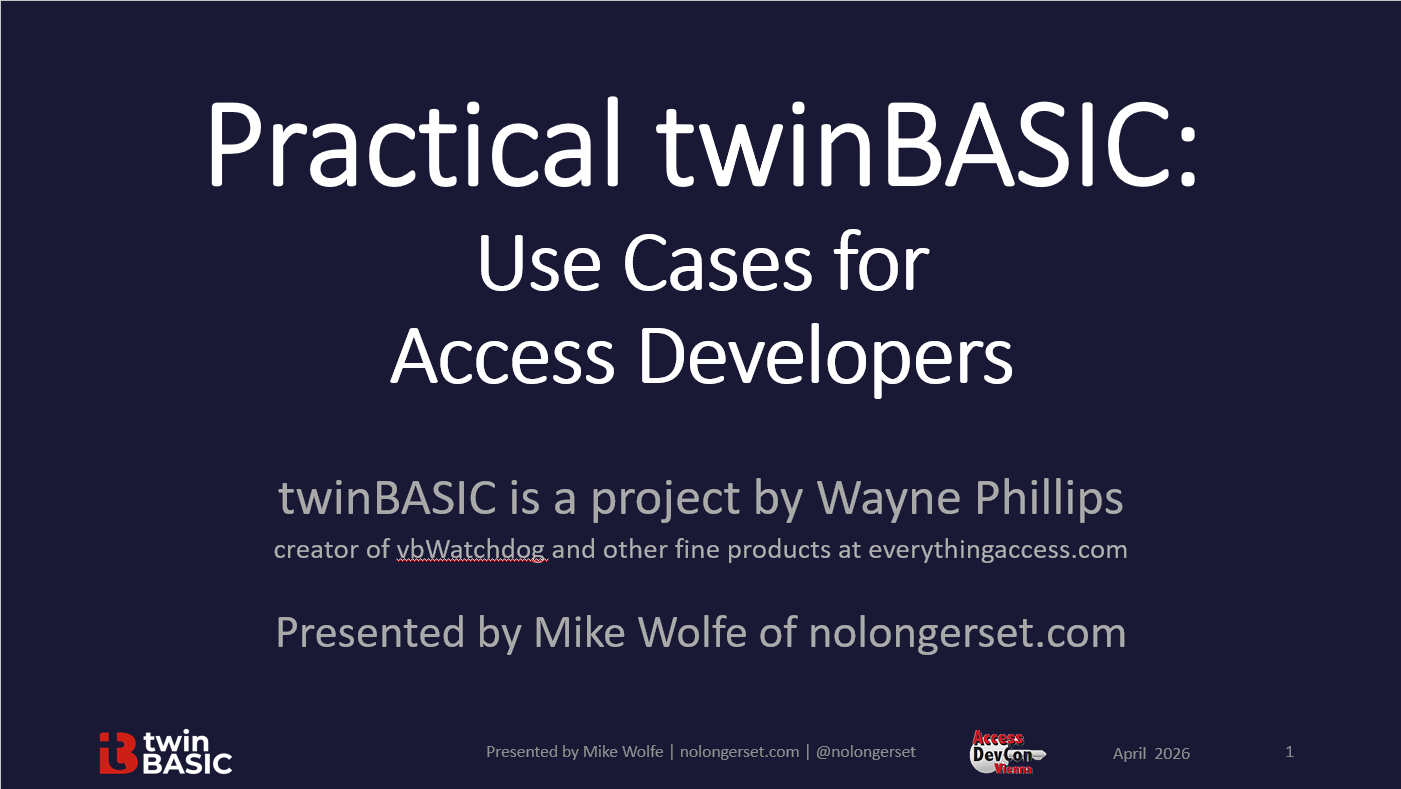
In my fourth annual DevCon Vienna talk, I demonstrated how this modern programming language can enhance Microsoft Access development.
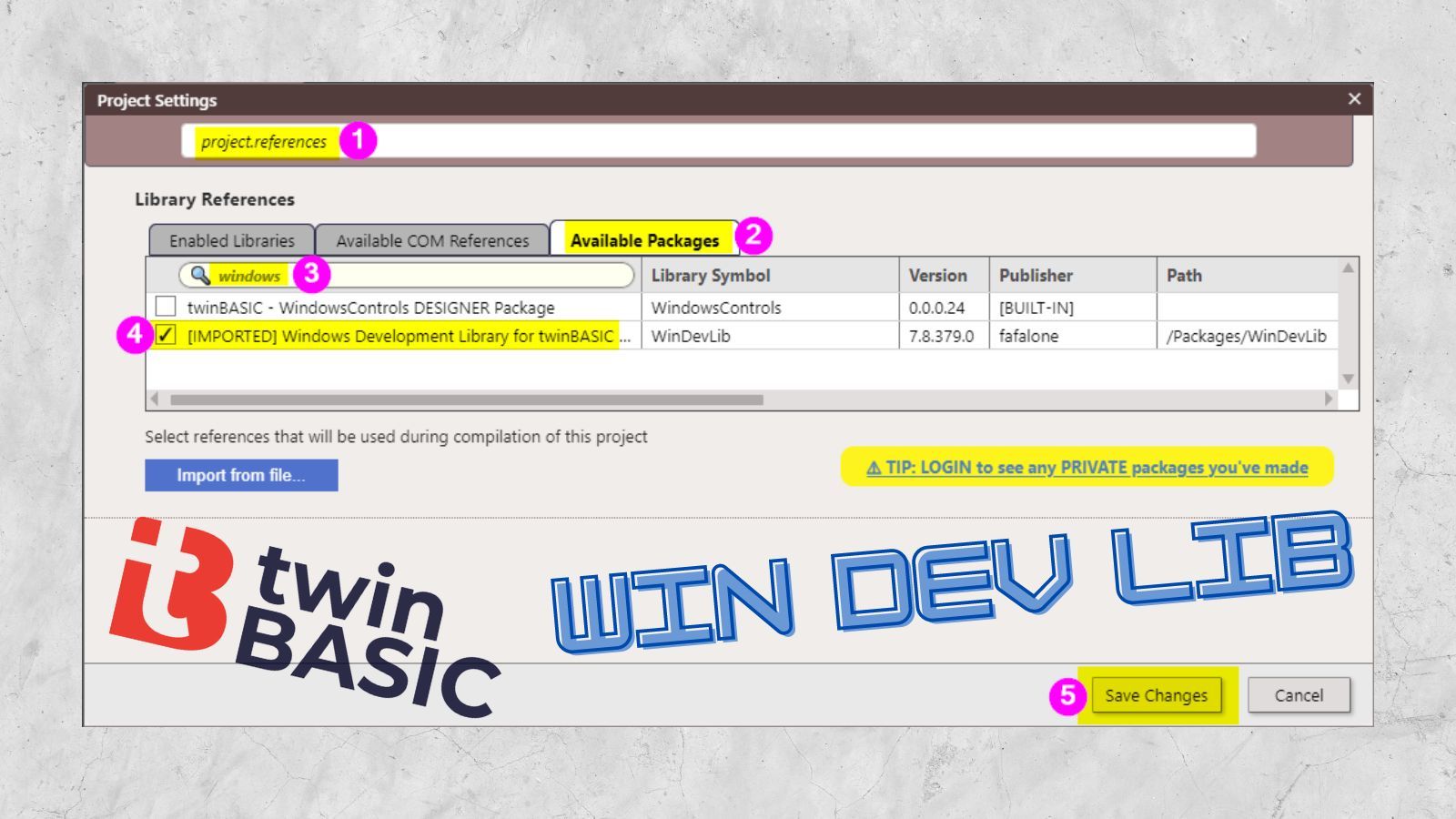
Through a hands-on demo, I showed how quickly developers can create and customize Access add-ins using twinBASIC, with a special focus on creating strongly-typed collection classes–a task that's traditionally cumbersome in VBA. I highlighted key improvements to the development environment and showcased the new Windows Development Library package that simplifies API calls.
NOTE: There is no recording available for this presentation. The link below is for the slide deck and related resources. However, the slide deck includes additional details about some of the new features added since DevCon 2024 that I did not have time to cover in today's half session.
Last year, I gave a sneak preview of an experimental project that Wayne is tentatively calling twinBASIC for Applications (tBA). Unfortunately, there is no update on that project this year, as Wayne has been focusing on finalizing 100% backwards compatibility with VB6 so that he can get to the version 1.0 launch of twinBASIC. I expect this is a topic he will explore in the future once he gets version 1.0 released.
Sign up to receive a Sunday morning email with links and recaps of the seven articles published that week. (I'll never sell your email. Unsubscribe any time.)

 NoLongerSet
 Mike Wolfe



 WaynePhillipsEA